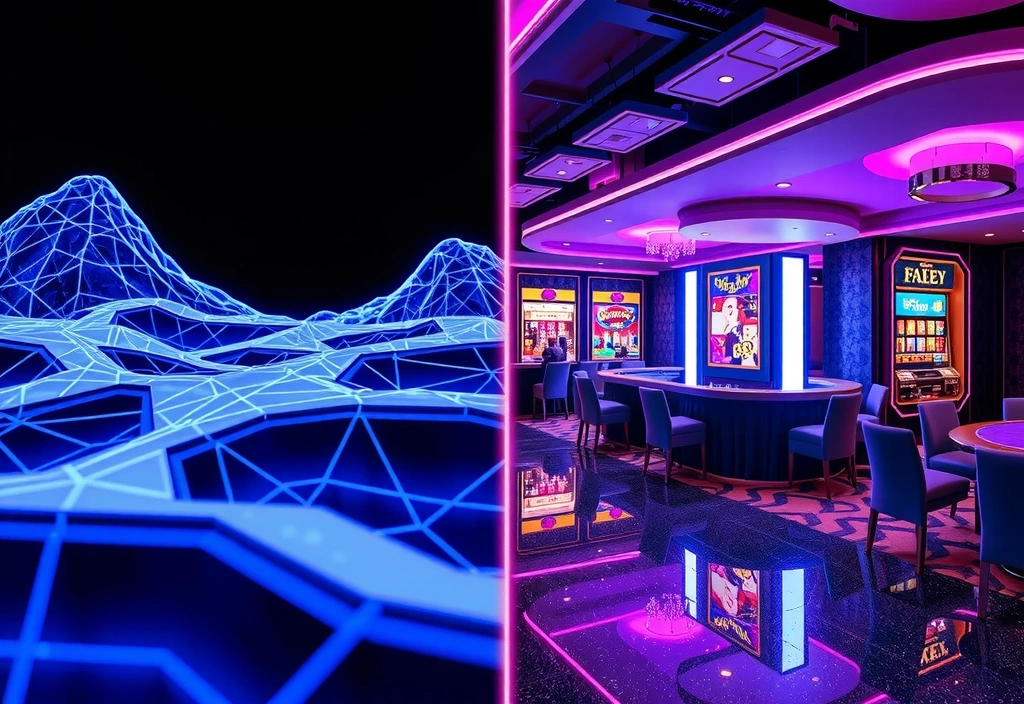
As the Italian iGaming market shifts toward hyper-personalized, cross-platform experiences, the reliance on rigid, "black-box" engines is presenting a critical bottleneck for studios. We examine the transition to modular engine bridges.
Vulkan API Adoption: Managing Hardware Abstraction for Legacy Android Devices in rural Italy.
A technical deep-dive into how we maintain competitive integrity in high-stakes iGaming apps when hardware throughput varies by over 200%. The trade-off between visual fidelity and frame-rate stability is no longer binary.
Compliance Notice
AAMS Regulatory Shift: New Secure Access Protocols.
Immediate impacts on iGaming application architecture following the latest ADM (Agenzia delle Dogane e dei Monopoli) update.
Optimizing Unity HDRP for Cross-Platform iGaming in Italy.
In our latest project, a high-fidelity strategy title with integrated real-money mechanics, the challenge was stark: maintain the visual luxury of the Italian High-Roller profile while ensuring perfect parity on mid-range tablets. Our post-mortem revealed that standard HDRP behaviors were draining 40% of GPU cycles on unnecessary draw calls for atmospheric effects that added zero value to the mobile player.
By rewiring the Unity HDRP shadow-map distribution, our engineers managed to claw back approximately 18ms of frame time. This wasn't achieved through lowering resolution, but through intelligent hardware abstraction. We isolated the shader graphs and implemented seasonal server-side triggers that adjust visual density based on real-time network throughput measured at Milanese server nodes.
Fig 1.1: Bridge Topology Mesh Optimization
Fig 1.2: Regional Latency Heatmap (Milan-Napoli)
The Trade-off Map: Performance vs Fidelity
01
Visual Complexity vs Frame Stability
Increasing vertex density for luxury feel (Cost) results in dropped frames on older chips (Mitigation: Dynamic LOD switching at 10% battery threshold).
02
Global Reach vs Regional Compliance
A single global binary (Benefit) conflicts with Italian AAMS-specific data storage rules (Mitigation: Regional edge-computing bridges).
Questions Investors Should Ask
It remains fragmented. While fiber adoption is high in Milan and Rome, rural reliability fluctuates, requiring robust fallback logic and client-side asset caching to prevent session disconnects.
Not if the bridge logic is handled server-side. Security risks usually arise from locally-stored game logic, which Skybridges mitigates through real-time state validation at the server node level.
It adds 20-30% to the testing lifecycle, as UI elements and payment flow logic must strictly adhere to the technical document protocols enforced by Italian authorities.
Key Takeaway
The future of gaming isn't in "The Metaverse" or generic blockchain hype; it's in the ultra-low latency infrastructure that allows high-fidelity experiences to run flawlessly on the devices consumers already own. Optimize for the hardware ceiling, but build for the hardware floor.
Our Assessment Boundaries
Region: Focus strictly on Italian digital infrastructure and AAMS/ADM regulatory frameworks.
Technology: Analysis limited to Unity, Unreal, and custom C++ bridges. No web3/crypto speculation.
Timeline: Data sets based on 2025 performance cycles. Future projections subject to ADM 2026 update shifts.
LOG: RES-041
Hardware Optimization Checklist
120-point diagnostic for iGaming apps launching in the southern Italian markets.
The Vulkan API represents the most significant leap for Android gaming performance, but it comes with extreme overhead in terms of memory management. For iGaming developers in Italy, where 4G networks still dominate in some regions, Vulkan's shader pre-caching can lead to massive initial download spikes.
Skybridges recommends a tiered implementation: utilize Vulkan for high-end flagship devices while maintaining an OpenGL ES 3.1 fallback pipeline for the majority of the active user base to ensure 99.9% application accessibility.
This website uses cookies to ensure you get the best experience on our website. Learn More